PLEASE tracker
Two weeks of sleep, food, movement, substances and mood, side by side, so the pattern becomes visible.
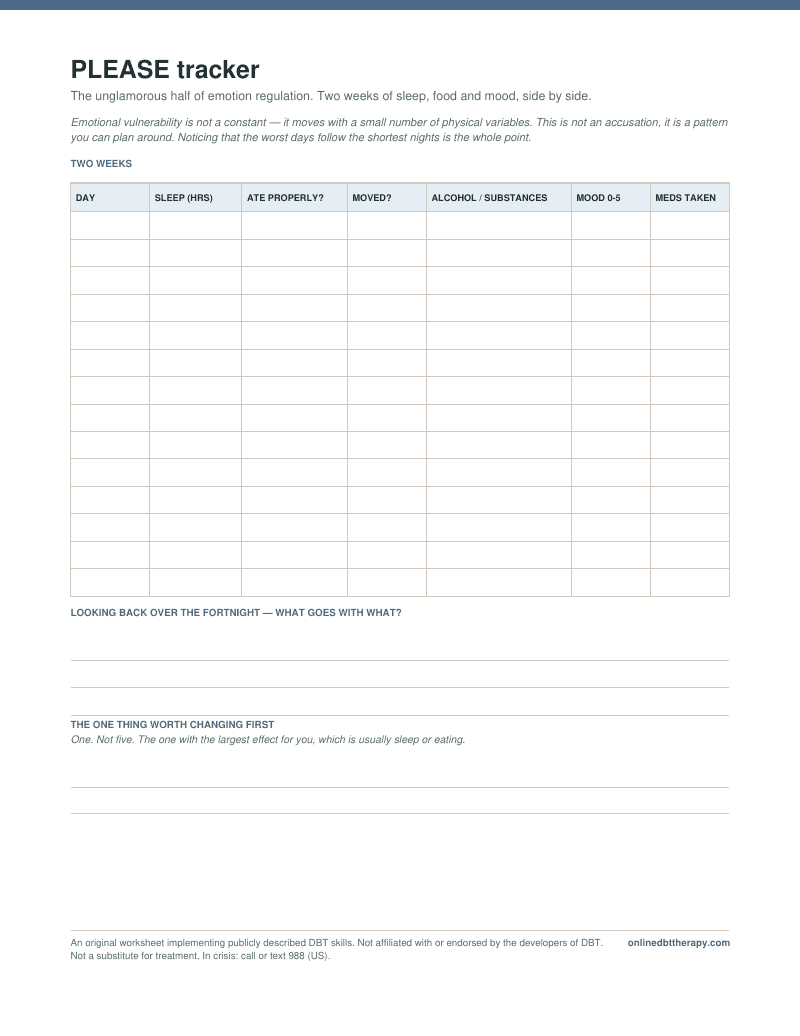
PDF, 1 page, 2.5 kB. US Letter, prints in black and white. No email required.
When to use it
When the bad days feel random. Two weeks of data is usually enough to show that they are not.
How to fill it in
- Fill in one row a day. It takes about thirty seconds.
- Be honest about the alcohol column specifically — it is the one people round down, and it is frequently the one doing the work.
- At the end of the fortnight, look for what goes with what. The most common finding is that the worst days follow the shortest nights.
- Pick one thing to change. One, not five.
The thing that makes it useless
Reading it as an accusation. It is a pattern you can plan around — including by coping ahead on the days you already know will be thin.
The other worksheets
An original worksheet implementing skills that are widely taught and publicly described. It is not a reproduction of the published DBT handouts, which are copyrighted by their publisher, and nothing here is affiliated with or endorsed by the developers of DBT. If you are in a programme, use whatever your team gives you — a diary card your therapist designed is the one they will be reading.
General information, not clinical advice; the people described are composites, not real clients. DBT skills are not a substitute for treatment or for a safety plan. Listings on this site are maintained by independent practices. If you are in immediate danger, call 911; the 988 Suicide & Crisis Lifeline is available by call or text any time.