Worksheets
Print them, write on them
Ten one-page PDFs you can print and write on — a weekly diary card, a chain analysis, the four-box pros and cons, a DEAR MAN planner, and a TIPP card sized for a wallet. Each has a page explaining what it’s for and how to fill it in. Free, no email required, nothing to sign up for.
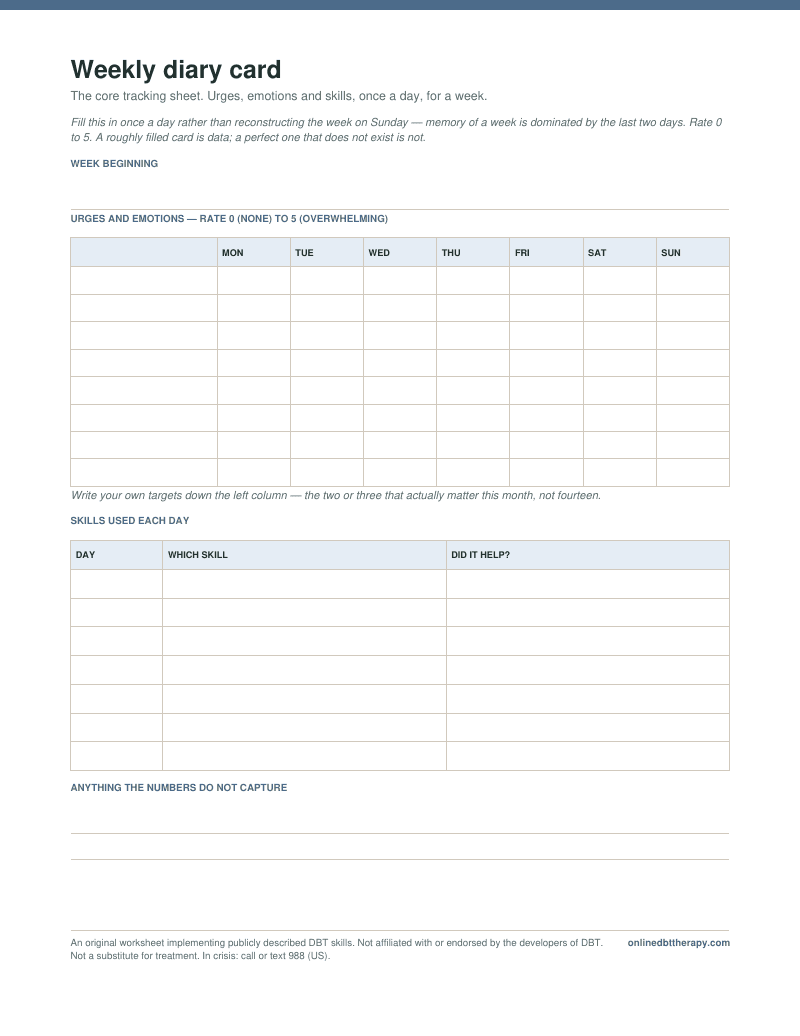 Weekly diary cardThe core tracking sheet. Urges, emotions and skills, once a day, for a week.How to use itPDF, 2.6 kB ↓
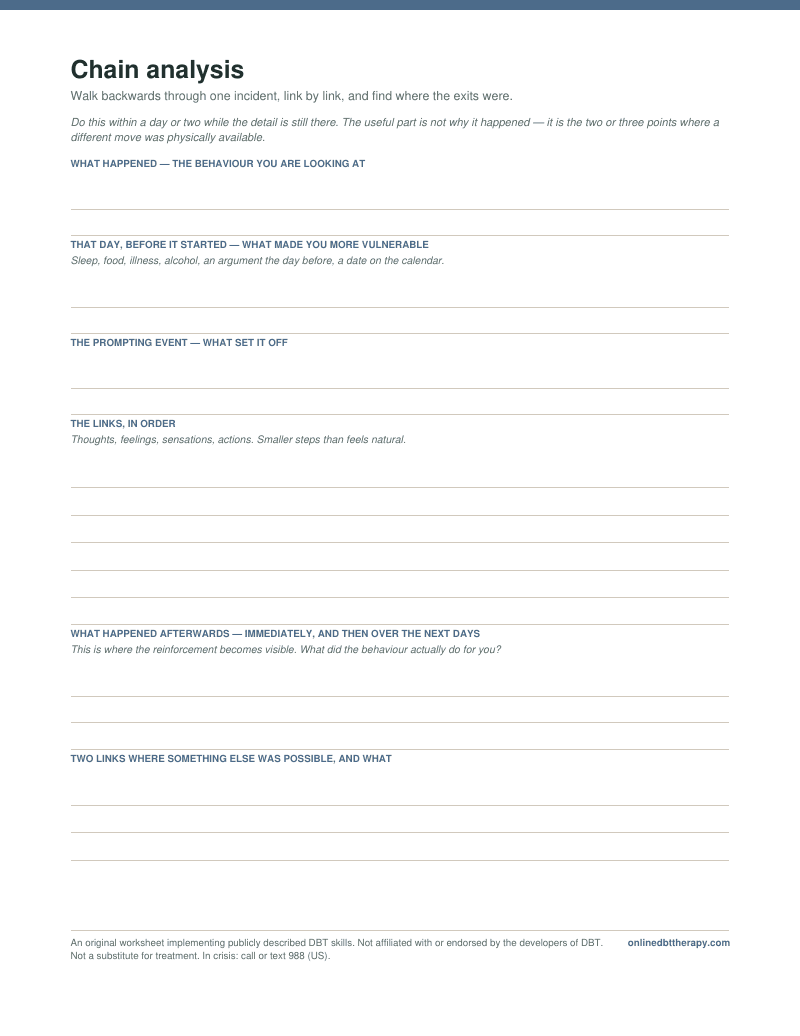 Chain analysisWalk backwards through one incident, link by link, and find where the exits were.How to use itPDF, 2.4 kB ↓
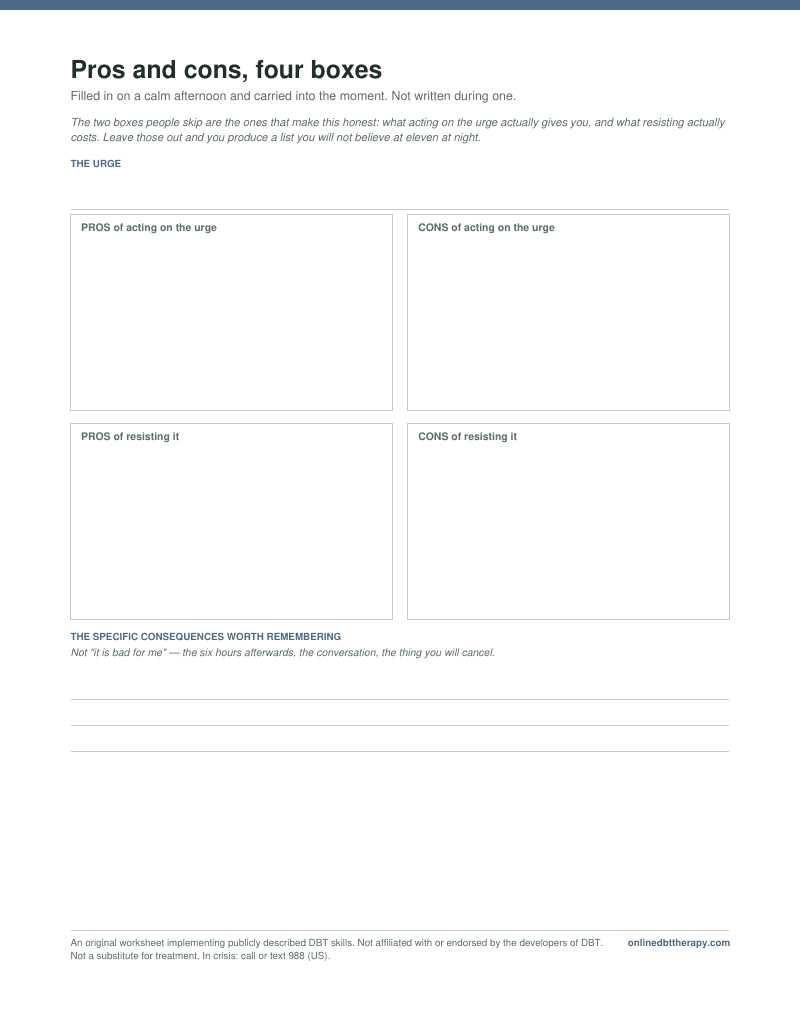 Pros and cons, four boxesFilled in on a calm afternoon and carried into the moment. Not written during one.How to use itPDF, 2.1 kB ↓
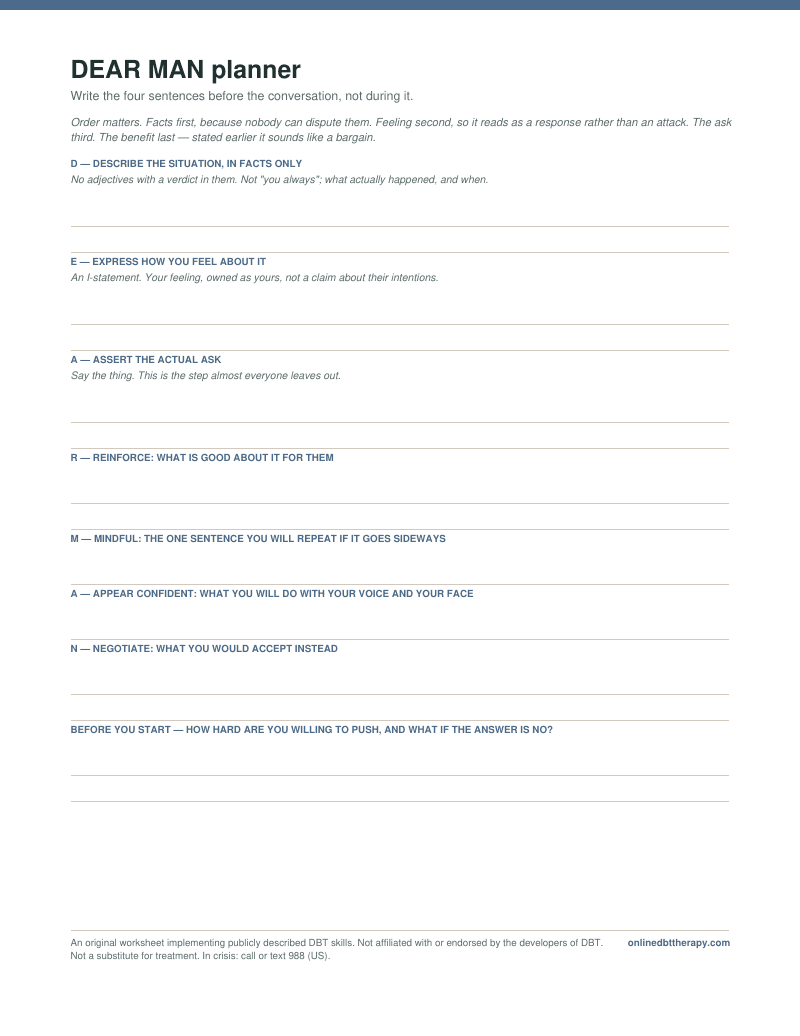 DEAR MAN plannerWrite the four sentences before the conversation, not during it.How to use itPDF, 2.5 kB ↓
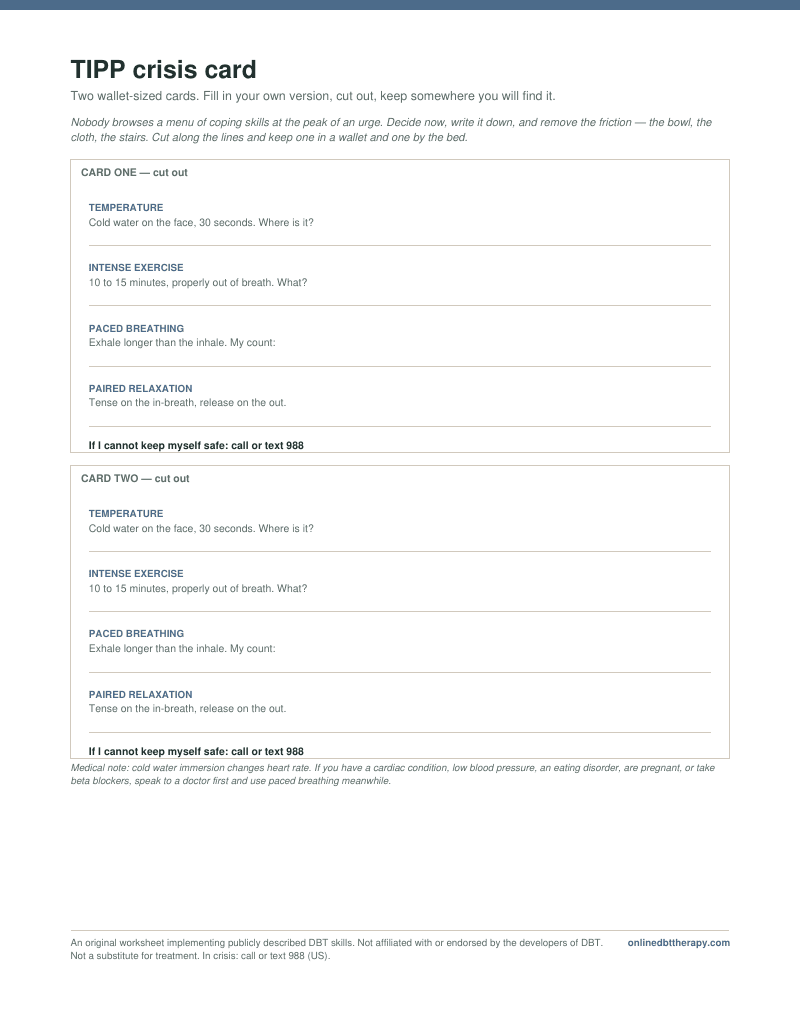 TIPP crisis cardTwo wallet-sized cards. Fill in your own version, cut out, keep somewhere you will find it.How to use itPDF, 2.7 kB ↓
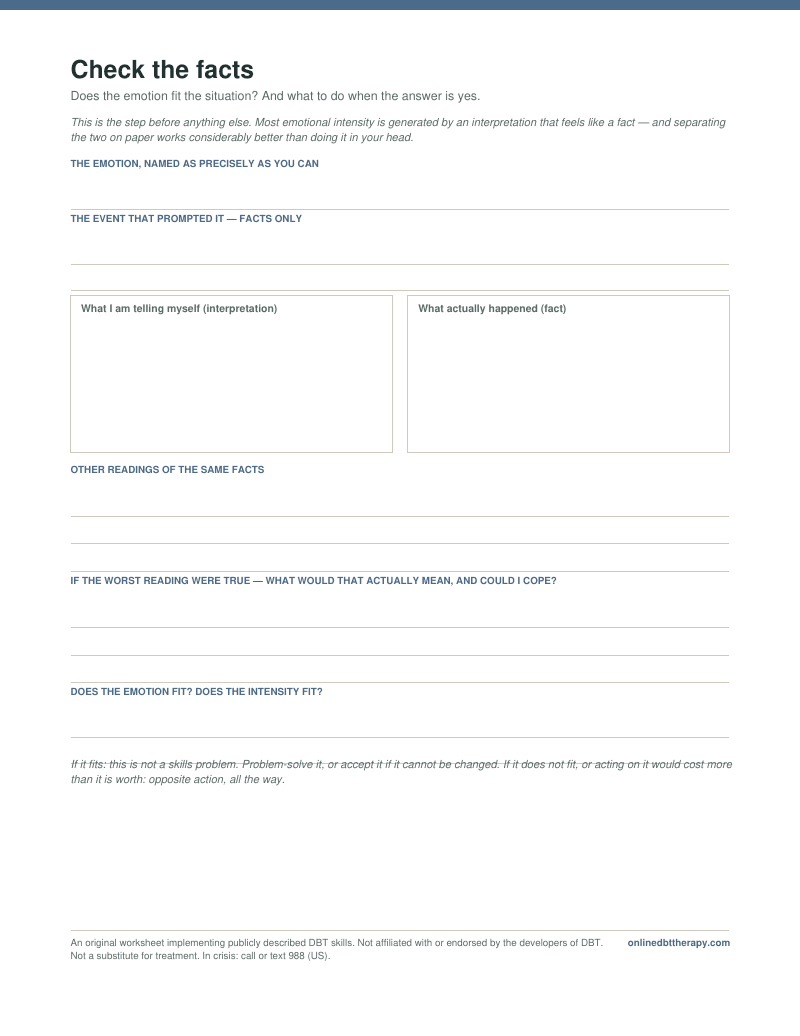 Check the factsDoes the emotion fit the situation? And what to do when the answer is yes.How to use itPDF, 2.4 kB ↓
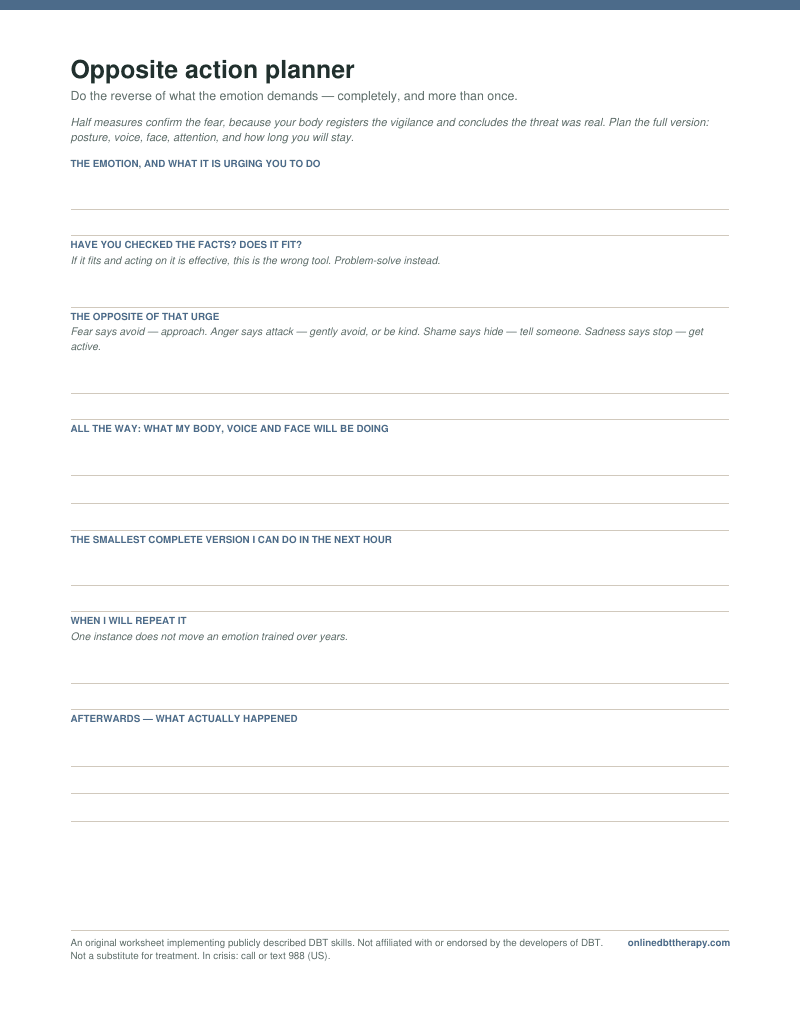 Opposite action plannerDo the reverse of what the emotion demands — completely, and more than once.How to use itPDF, 2.5 kB ↓
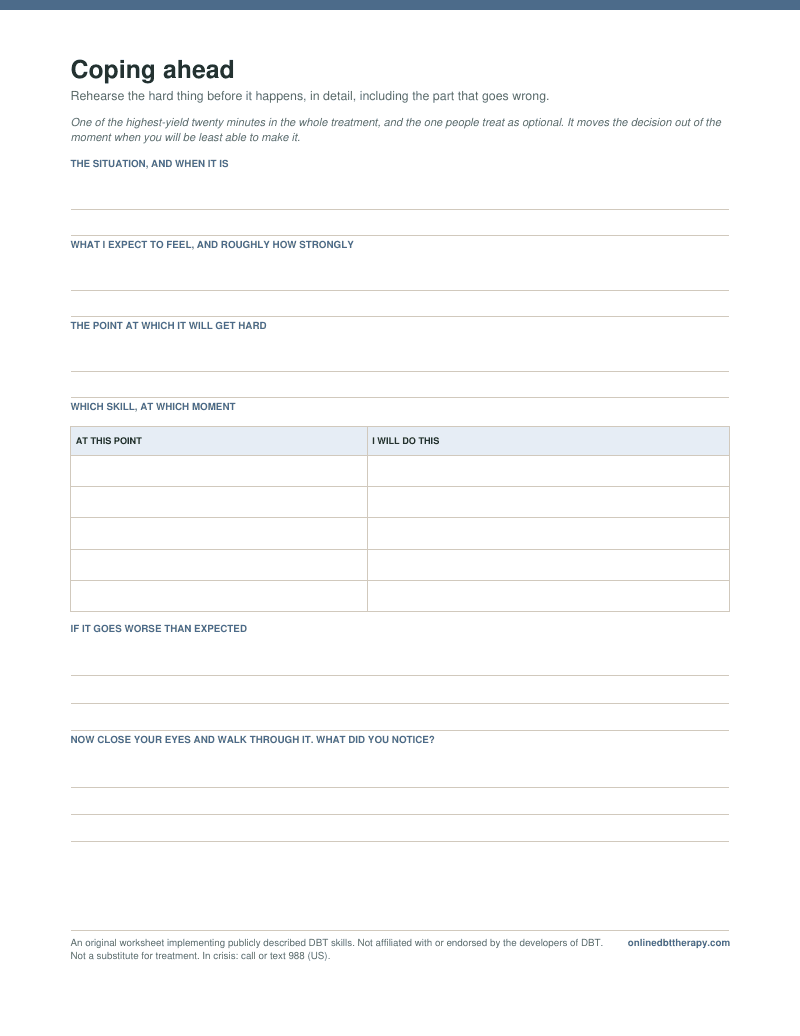 Coping aheadRehearse the hard thing before it happens, in detail, including the part that goes wrong.How to use itPDF, 2.3 kB ↓
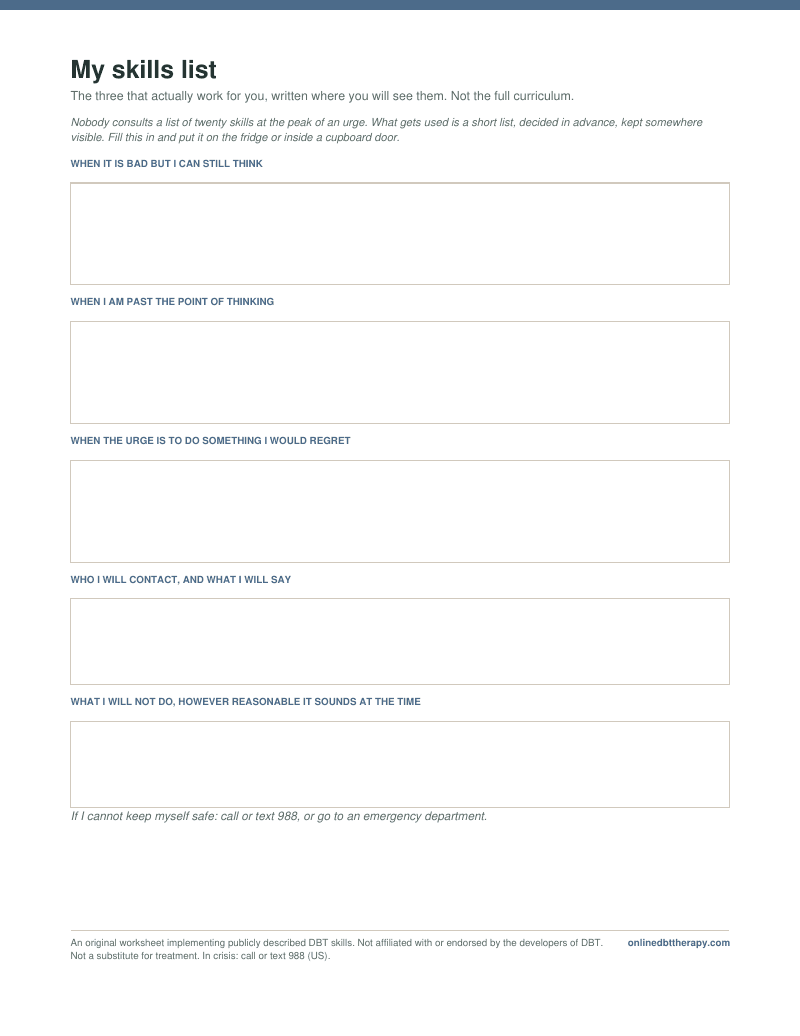 My skills listThe three that actually work for you, written where you will see them. Not the full curriculum.How to use itPDF, 2.1 kB ↓
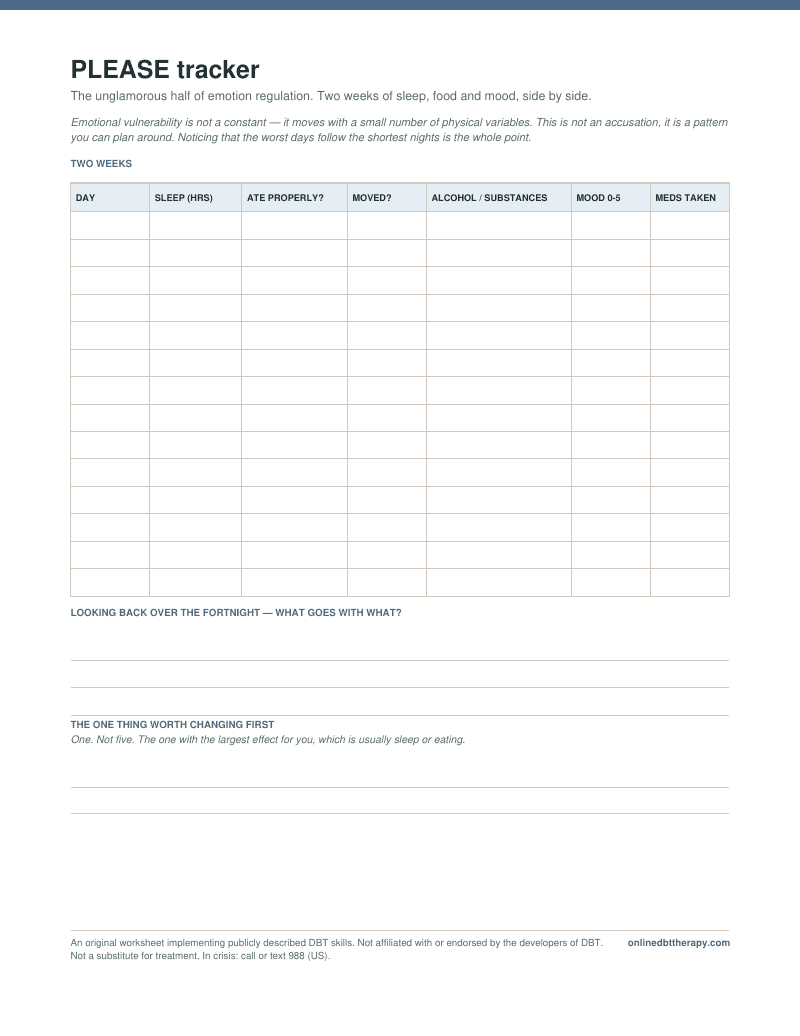 PLEASE trackerThe unglamorous half of emotion regulation. Two weeks of sleep, food and mood, side by side.How to use itPDF, 2.5 kB ↓
Using these well
Two of these are worth filling in when nothing is wrong. The pros and cons and the TIPP card only work if they already exist by the time you need them — nobody assembles a coping plan at the peak of an urge.
The diary card is the one people resent most and the one the whole treatment runs on. A roughly filled card, reconstructed from memory with two days guessed, is data. A perfect one that does not exist is not.
Where these came from
These are original worksheets, written and laid out here, implementing skills that are widely taught and publicly described. They are not reproductions of the published DBT handouts, which are copyrighted by their publisher, and nothing here is affiliated with or endorsed by the developers of DBT.
If you are in a programme, use whatever your team gives you instead — a diary card your therapist designed is the one they will be reading.
General information, not clinical advice; the people described are composites, not real clients. DBT skills are not a substitute for treatment or for a safety plan. Listings on this site are maintained by independent practices. If you are in immediate danger, call 911; the 988 Suicide & Crisis Lifeline is available by call or text any time.